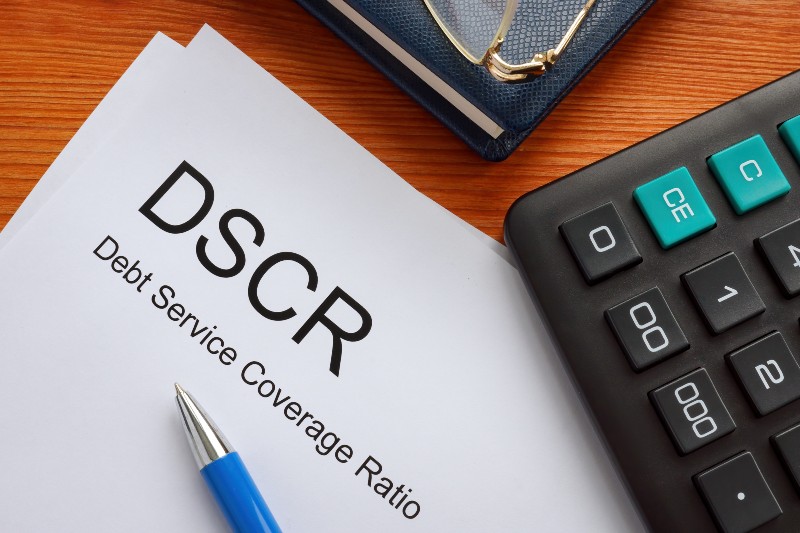
An investment property is any piece of real estate that is purchased for the purpose of generating income, profit, or tax advantages rather than as a primary residence. To qualify for investment property financing, you must meet stricter standards, and you may need to make a larger down payment or agree to a higher interest rate than you would for a primary residence. A Debt Service Coverage Ratio (DSCR) loan may be the best option for independent, or W-2 exempt investors who want to qualify based on cash flow rather than personal tax returns. Here’s a closer look at why real estate investors are choosing DSCR loans in El Paso, TX, and New Mexico over traditional mortgages.
What Is a DSCR Mortgage?
A DSCR mortgage is a specialized loan that is designed to meet the needs of real estate investors who are self-employed or W-2 exempt. It allows them to qualify for a loan based on available cash flow from the investment property, rather than using their personal income, tax returns, or employment history. Let’s take a look at the differences between a DSCR loan vs. traditional mortgage:
- Qualifications and Eligibility – For a DSCR loan, you use the property’s projected rental income to qualify for a loan, whereas with a traditional loan, you would undergo a personal debt-to-income (DTI) ratio check.
- Documentation – You need to provide lease agreements and/or 1007 rent schedules for a DSCR mortgage; for a traditional loan, you would provide W-2s, paystubs, personal tax returns, and bank and investment account statements.
- Down Payment – The typical down payment for a DSCR loan-financed property is 20-25%. For a traditional mortgage loan, it is 15-25% for an investment property and 3-5% for a primary residence.
- Interest Rates – Interest rates are usually higher for DSCR loans, with borrowers paying 0.75-2.0% above prime. Traditional mortgage loans adhere to standard market rates.
- Closing Entity – The closing entity for a DSCR mortgage is often an LLC, though it can be in your own name. Traditional mortgages are always in your personal name.
- Portfolio Limits – A DSCR loan allows for unlimited financed properties, while a traditional loan is capped at 10.
- Prepayment Penalty – Prepayment penalties are prohibited for conventional loans, but it is common for DSCR loans to have a one- to five-year prepayment penalty.
How Traditional Investment Property Loans Work
A traditional or conventional mortgage loan requires borrowers to qualify based on personal financial health and DTI ratio. The loan undergoes a standard underwriting process during which underwriters execute a four-step financial audit that includes personal DTI ratio calculations, assessment for qualification for the 75% rental income cut, an audit of asset liquidity or personal cash reserves for future mortgage payments, and an assessment of your personal risk level for potential loan-level price adjustments.
Who Should Consider a DSCR Loan?
A DSCR loan is a flexible, quick way to finance an investment property, but it isn’t right for everyone. Consider a DSCR loan if you:
- Are a business owner or are self-employed and your tax returns show low net income that could result in a failure of a DTI ratio check
- Want to protect your personal assets
- Would prefer to close the loan under an LLC rather than your personal name
- Own multiple financed properties and are prohibited by federal guidelines from taking out another traditional loan
- Want to close quickly without an audit of your personal financial history
Key Benefits of DSCR Loans for Investors
For many people, the benefits of a DSCR loan outweigh the risk. The process is particularly appealing to investors who want to finance multiple rental properties. Some of the biggest benefits are:
- Ability to bypass personal income requirements and maintain privacy over tax returns, pay information, and investment accounts
- Shorter and simpler underwriting process and accelerated closing speeds
- Potential for scaling portfolios and financing an unlimited number of rental properties
- Protection of personal assets and corporate structures as loans can close under an LLC
- Preservation of tax write-offs so self-employed investors won’t be rejected based on business tax deductions
- Streamlines the process for multiple borrowers
- Allows you to leverage monthly cash flow through interest-only payment structures
Potential Drawbacks and Risks of DSCR Loans
Like any other loan or form of financing, a DSCR loan does carry risks. It’s important to understand them so that you can make an informed decision:
- Higher interest rates than traditional or conventional loans
- Larger down payments than a conventional mortgage, which can limit your day-one purchasing power
- Potential for prepayment penalties if you sell or refinance in the first one to five years
- Added risk if the tenant leaves and the property remains vacant
- Requires strong personal credit scores to qualify
- Reduces monthly profits due to higher interest rate
- Carries higher origination points and administration fees compared to conventional loans
Explore Your Options for Real Estate Investor Loans
Rocky Mountain Mortgage Co. offers local expertise for investors looking for rental properties in Texas and New Mexico. We use an in-house underwriting team for DSCR loans, streamlining the process and making it easier for real estate investors to scale portfolios and structure non-QM asset loans. While most traditional DSCR lenders require a personal credit score of 660-700, we can qualify properties at a 620 credit score for some investors. This allows self-employed or low-credit applicants a pathway to purchase an income-generating asset. We also allow investors to close deals under an LLC or corporate structure, and offer unlimited cash-out options. Call now or contact us online to schedule a consultation for a real estate investor loan in El Paso, TX, or New Mexico.